GRACE Electron Density derived from the K-Band Ranging System (KBR)
Cite as:
Xiong, Chao; Lühr, Hermann; Stolle, Claudia (2021): GRACE Electron Density derived from the K-Band Ranging System (KBR). V. 0101. GFZ Data Services. https://doi.org/10.5880/GFZ.2.3.2021.003
Status
I N R E V I E W : Xiong, Chao; Lühr, Hermann; Stolle, Claudia (2021): GRACE Electron Density derived from the K-Band Ranging System (KBR). V. 0101. GFZ Data Services. https://doi.org/10.5880/GFZ.2.3.2021.003
Abstract
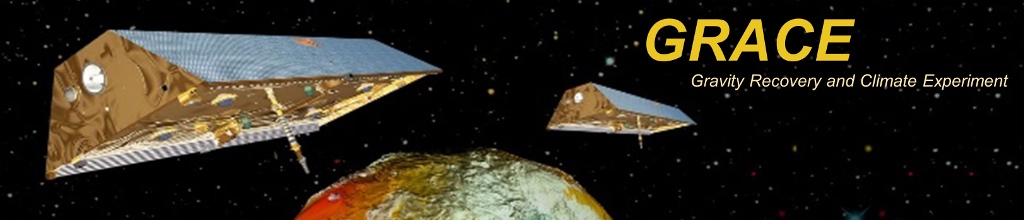
The GRACE (Gravity Recovery and Climate Experiment) satellites, which comprises two spacecraft, GRACE-A and GRACE-B, were launched on 17 March 2002 into a near-circular, polar (inclination = 89◦ ) orbit with an initial altitude of about 490 km. The two satellites follow each other at a distance of about 200 km. The primary objective of the GRACE mission is to provide global high-resolution models of the Earth’s gravity field. The instruments supporting our study are the K-Band Ranging System (KBR), and the GPS Space Receiver (GPS).
The K-Band Ranging System (KBR) system is the key science instrument of GRACE which measures the dual one-way range change between both satellites with a precision of about 1 μm per second. From the KBR1B data we can get the change of Total Electron Content (TEC). In addition the GPS Navigation Data (GNV1B) can provide us the position of the two satellites. From these data we can derive the average electron density between the two satellites.
The data are stored as daily ASCII files using the file naming convention 'KBRNE_YYYY_MM_DD.dat'. Headers in each data file contain a short name for each column. A more detailed description is provided in the readme file.
Authors
Xiong, Chao;GFZ German Research Centre for Geosciences, Potsdam, Germany
Lühr, Hermann;GFZ German Research Centre for Geosciences, Potsdam, Germany
Stolle, Claudia;GFZ German Research Centre for Geosciences, Potsdam, Germany
Contact
Stolle, Claudia; GFZ German Research Centre for Geosciences, Potsdam, Germany; ➦
Michaelis, Ingo; GFZ German Research Centre for Geosciences, Potsdam, Germany; ➦
affiliation (affiliationIdentifier=0000-0002-7518-9368 affiliationIdentifierScheme=ORCID): GFZ German Research Centre for Geosciences, Potsdam, Germany
affiliation (affiliationIdentifier=0000-0002-1599-6758 affiliationIdentifierScheme=ORCID): GFZ German Research Centre for Geosciences, Potsdam, Germany
affiliation (affiliationIdentifier=0000-0002-5717-1623 affiliationIdentifierScheme=ORCID): GFZ German Research Centre for Geosciences, Potsdam, Germany
titles
title: GRACE Electron Density derived from the K-Band Ranging System (KBR)
affiliation (affiliationIdentifier=0000-0002-7518-9368 affiliationIdentifierScheme=ORCID): GFZ German Research Centre for Geosciences, Potsdam, Germany
affiliation (affiliationIdentifier=0000-0002-7518-9368 affiliationIdentifierScheme=ORCID): GFZ German Research Centre for Geosciences, Potsdam, Germany
contributor (contributorType=ProjectLeader)
contributorName (nameType=Personal): Lühr, Hermann
affiliation (affiliationIdentifier=0000-0002-1599-6758 affiliationIdentifierScheme=ORCID): GFZ German Research Centre for Geosciences, Potsdam, Germany
contributor (contributorType=Researcher)
contributorName (nameType=Personal): Lühr, Hermann
affiliation (affiliationIdentifier=0000-0002-1599-6758 affiliationIdentifierScheme=ORCID): GFZ German Research Centre for Geosciences, Potsdam, Germany
affiliation (affiliationIdentifier=0000-0002-5717-1623 affiliationIdentifierScheme=ORCID): GFZ German Research Centre for Geosciences, Potsdam, Germany
affiliation (affiliationIdentifier=0000-0002-5717-1623 affiliationIdentifierScheme=ORCID): GFZ German Research Centre for Geosciences, Potsdam, Germany
contributor (contributorType=ContactPerson)
contributorName: Stolle, Claudia
affiliation (affiliationIdentifier= affiliationIdentifierScheme=): GFZ German Research Centre for Geosciences, Potsdam, Germany
contributor (contributorType=ContactPerson)
contributorName: Michaelis, Ingo
affiliation (affiliationIdentifier= affiliationIdentifierScheme=): GFZ German Research Centre for Geosciences, Potsdam, Germany
dates
date (dateType=Created): 2015-04-30
date (dateType=Collected): 2002-04-04T10:55:27/2015-04-30
CharacterString: The GRACE (Gravity Recovery and Climate Experiment) satellites, which comprises two spacecraft, GRACE-A and GRACE-B, were launched on 17 March 2002 into a near-circular, polar (inclination = 89◦ ) orbit with an initial altitude of about 490 km. The two satellites follow each other at a distance of about 200 km. The primary objective of the GRACE mission is to provide global high-resolution models of the Earth’s gravity field. The instruments supporting our study are the K-Band Ranging System (KBR), and the GPS Space Receiver (GPS).
The K-Band Ranging System (KBR) system is the key science instrument of GRACE which measures the dual one-way range change between both satellites with a precision of about 1 μm per second. From the KBR1B data we can get the change of Total Electron Content (TEC). In addition the GPS Navigation Data (GNV1B) can provide us the position of the two satellites. From these data we can derive the average electron density between the two satellites.
The data are stored as daily ASCII files using the file naming convention 'KBRNE_YYYY_MM_DD.dat'. Headers in each data file contain a short name for each column. A more detailed description is provided in the readme file.
pointOfContact
CI_ResponsibleParty
individualName
CharacterString: Stolle, Claudia
organisationName
CharacterString: GFZ German Research Centre for Geosciences, Potsdam, Germany
CI_OnLineFunctionCode (codeList=http://www.isotc211.org/2005/resources/Codelist/gmxCodelists.xml#CI_OnLineFunctionCode codeListValue=http://www.isotc211.org/2005/resources/Codelist/gmxCodelists.xml#CI_OnLineFunctionCode_information): information
 Released
 Dataset
 Abstract
 ;GFZ German Research Centre for Geosciences, Potsdam, Germany
 Files
Files